Article
An in-depth exploration of the unique, sensitive world of Jacques Payette
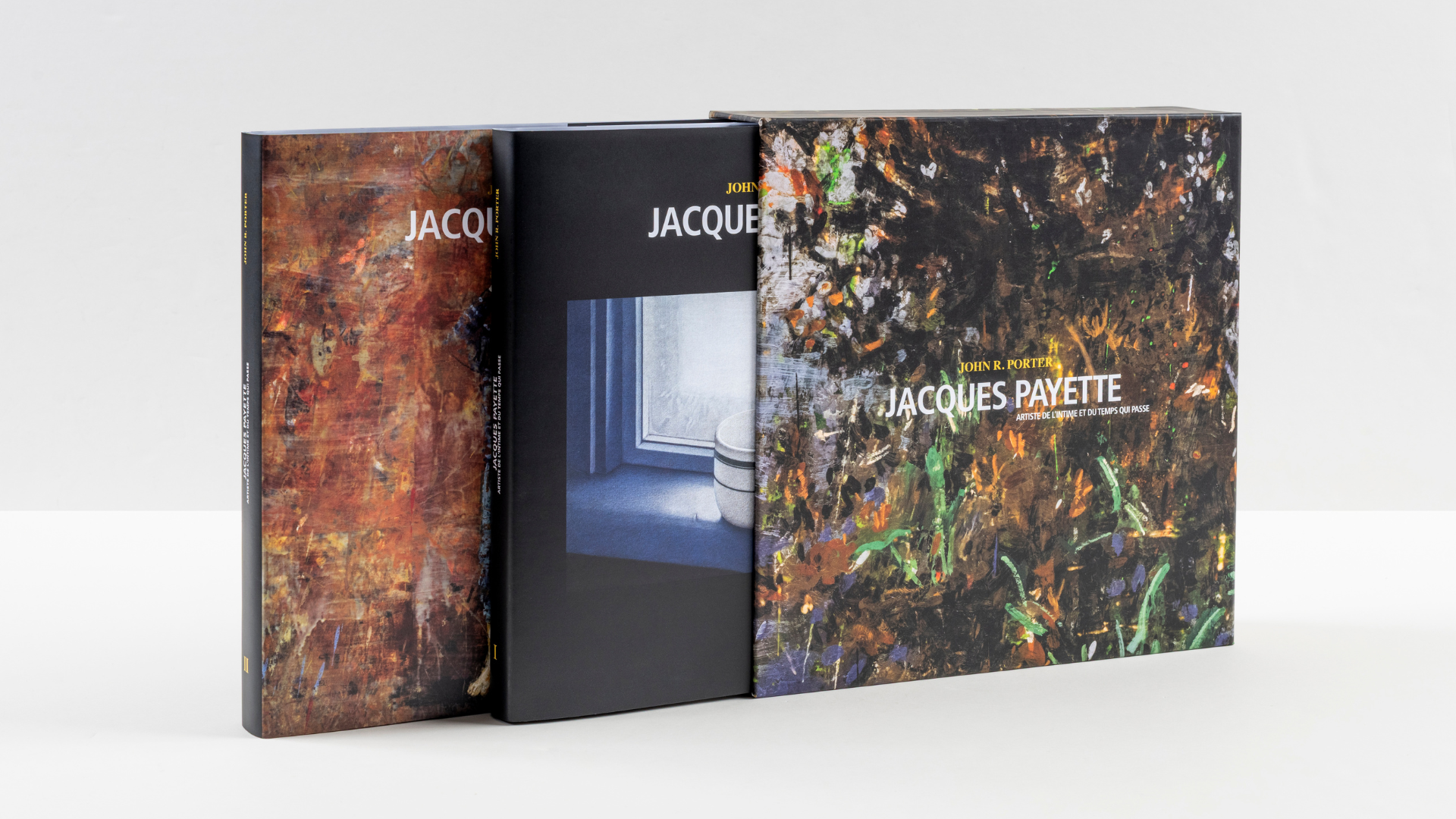
Thanks to the generous financial support of the Pierre Lassonde Family Foundation, we are proud to publish Jacques Payette: artiste de l’intime et du temps qui passe. This masterful two-volume monograph is by art historian John R. Porter. To mark this occasion, Mr. Porter offers us a preview of his in-depth exploration of the unique, sensitive world of Jacques Payette, a leading figure in contemporary Québec painting.
It was quite a challenge for me to pin down such an atypical and versatile artist, who has flirted with abstraction, pop art, Arte Povera, surrealism, conceptual art, ready-mades, and installations!
How do you define a jack-of-all-trades who loves all sorts of materials, from wood to encaustic wax—the latter of which he recycled endlessly? Nevertheless, I was ultimately able to identify two universal themes running through all of Payette’s work: intimacy and the passage of time.
A prolific self-taught artist
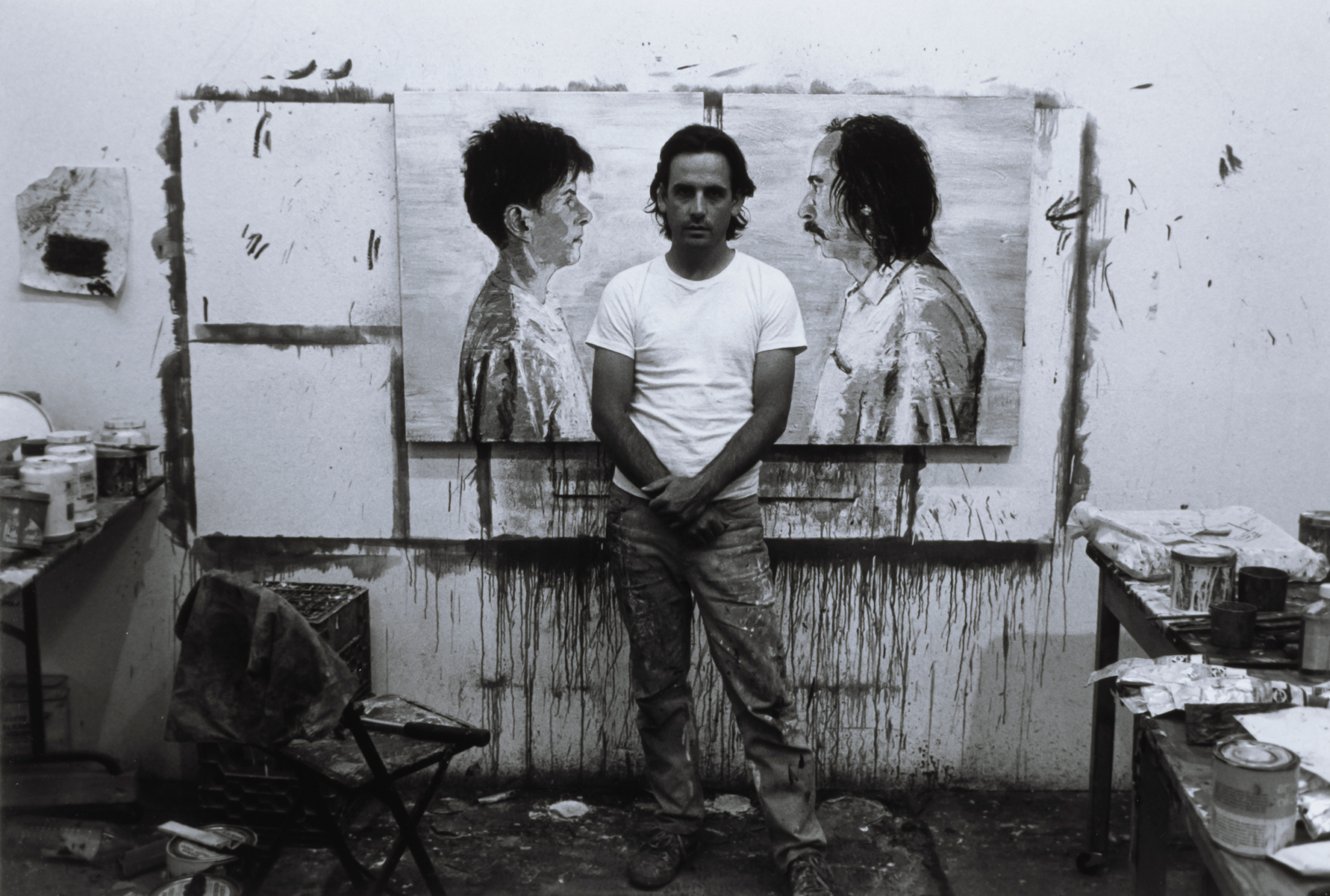
Jacques Payette is a full-fledged creator, earning a living from his art in Montréal. He was born in the east of the city in 1951, to a family of modest means. A talented self-taught artist, he was initially associated with the Nouvelle Figuration movement.
Represented by several renowned galleries, he regularly exhibits his work in Montréal, elsewhere in Canada, and internationally. His inventive spirit and engaging personality have attracted the interest of prominent art critics.
His drawings, paintings, and sculptures now feature prominently in hundreds of private and corporate collections in Canada, the United States, and Europe. They can also be found in many museums, public institutions, and university galleries across the country. The Musée national des beaux-arts du Québec alone owns 19 of these works, dating from 1979 to 2004, in addition to 20 photographs it acquired in 2024.
A few translated excerpts from the monograph
“My friend [Jacques] never ceases to amaze me, as a drawer and a painter, not to mention as a photographer, seeing as he published his four-volume box set in 2023. […] Isn’t it incredible that this self-taught artist has produced over 3,800 original works and some 100,000 photographs […]? It’s quite a feat for this genuine, unpretentious man who would rather work seven days a week in his studio than submit to the petty rituals of the art world’s insider circles.” — Pierre Lassonde
In her afterword, journalist and analyst Lise Bissonnette also commented on the uniqueness of Payette’s journey. She recalls in passing that her late husband, Godefroy-M. Cardinal, had encouraged him from the outset.
“Start with Jacques Payette’s photo of his mother’s childhood home in the poverty-stricken Faubourg à m’lasse. And then travel through time all the way to the fabulous release of a celebration of his work by John R. Porter, an art historian and one of our country’s top museologists, who devoted seven years to the project. […] John R. Porter has masterfully deciphered the themes of time and intimacy that emerge from the artist’s very being and the choices he makes—whether deliberate or accidental—in his consistent, even stubborn, way of inhabiting his world.” — Lise Bissonnette
For her part, Eve-Lyne Beaudry, Director of Collections and Research at the Musée national des beaux-arts du Québec, concludes her foreword with a heartfelt tribute to the artist. Fifteen years ago, she’d presented his work as curator of the exhibition Capturer le temps.
“I am indebted to the profoundly sensitive, open, and generous Jacques Payette for sharing the story of his artistic life through the pages of this book.” — Eve-Lyne Beaudry
In artists’ studios and galleries
The book also emphasizes the importance of figuration in contemporary and current art, a topic which is often overlooked. It sheds light on the environments in which many of our artists have worked since the 1970s.
The book draws back the curtain on different artists’ studios, including those of Sylvie Gélineau, Louise Robert, and Michel Goulet, as well as those of Jacques Payette in Saint-Martin de Beauce at 4060 Boulevard Saint-Laurent, 4375 Rue De Bullion, and others.
It also discusses the pivotal role of gallerists such as Laurent Tremblay, Madeleine Forcier, Denyse Delrue, Michel Tétreault, Jean-Pierre Valentin, and Jacques Bellefeuille, as well as the invaluable mediation work of various art critics.
Overall, readers are offered a wealth of discoveries, including insights into the daily lives of an exceptional artist.
Jacques Payette, artiste de l’intime et du temps qui passe is available to purchase at the Musée national des beaux-arts du Québec’s Librairie-Boutique for $125. The box set, the fruit of years of work, consists of two large volumes totalling 612 pages and 427 illustrations. It is available in French only.
In keeping with the wishes of the Musée and the Pierre Lassonde Family Foundation, and in a spirit of accessibility and sharing, copies of this book have already been distributed free of charge to over one hundred museums, galleries, universities, libraries, and exhibition centres in Québec and Canada.
Jacques Payette in our collection
To celebrate the release of the boxed set Jacques Payette, artiste de l’intime et du temps qui passe, we present a selection of the artist’s works.
Put art in your inbox!
Sign up for our twice-monthly newsletter to be the first to know about our upcoming exhibitions, activities, and promotions.